
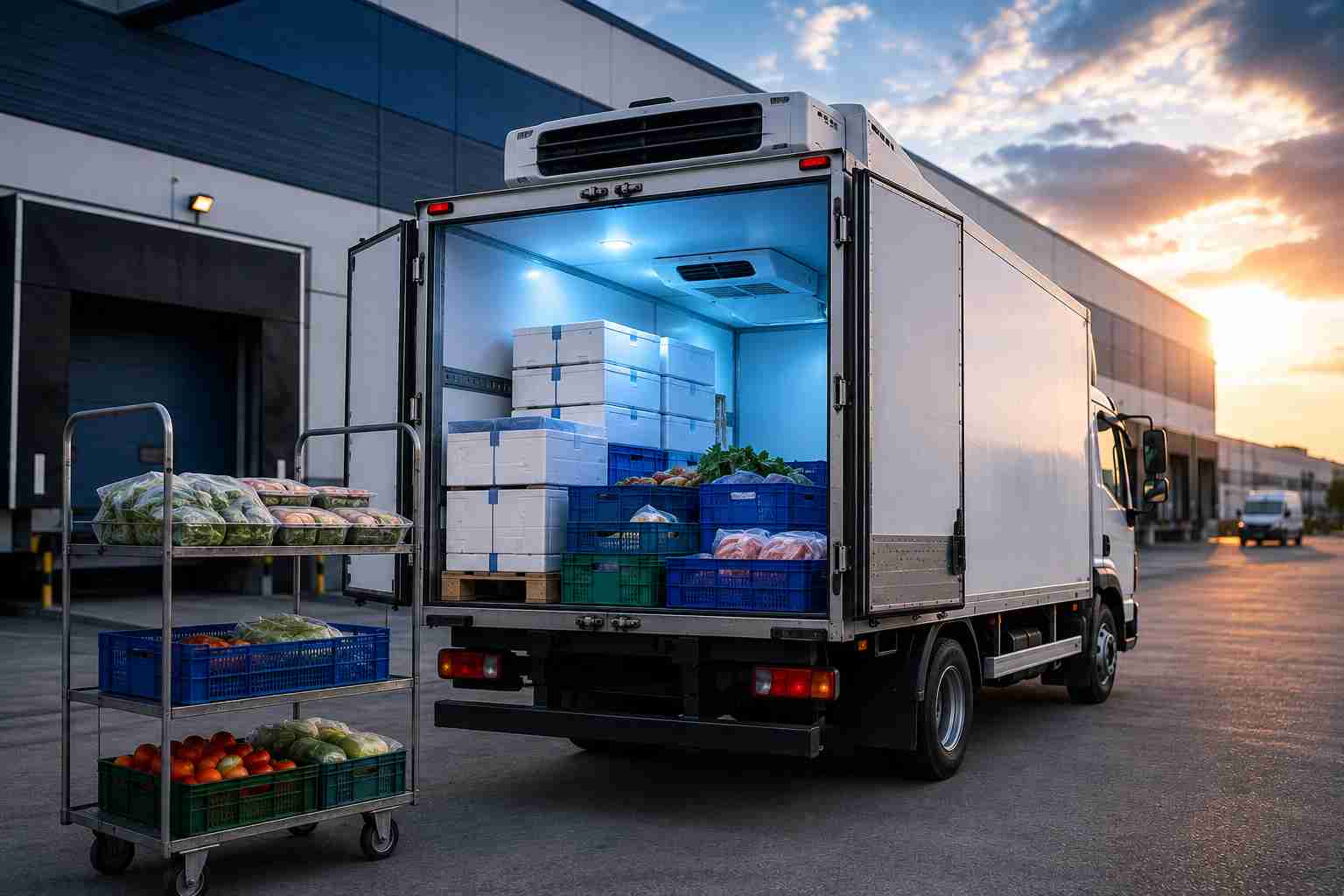
Temperature Controlled Logistics Explained
Some goods cannot simply be loaded onto any available vehicle. Chilled food, frozen products and other temperature-sensitive cargo need a controlled environment for the entire journey, not just while parked at a depot. This is the world of temperature controlled logistics, often called cold chain transport, where the goal is simple to state but demanding to deliver: keep the product within its required temperature range from collection to final delivery, without exception.
What Is Temperature Controlled Logistics?
Temperature controlled logistics refers to the transport and handling of goods that must be kept within a specific temperature range throughout their journey. This typically covers chilled goods, held a few degrees above freezing, frozen goods held well below zero, and other temperature-sensitive products where quality or safety depends on consistent conditions.
Unlike standard freight, where a short delay rarely affects the cargo itself, a break in the cold chain, even briefly, can affect product quality, shelf life or safety. That is why temperature controlled logistics is built around continuous control and monitoring, not just a refrigerated vehicle.
How Temperature Controlled Delivery Works
Pre-Cooling the Vehicle
Before loading, the vehicle or container is brought to the correct temperature range. Loading warm or unprepared goods into a vehicle that has not been pre-cooled puts unnecessary strain on the system and risks an early temperature excursion.
Loading & Securing
Goods are loaded quickly to minimise the time doors are open, and packed to allow air to circulate where the system requires it, rather than blocking airflow with tightly packed cargo.
Continuous Monitoring
Temperature is monitored throughout transit, not just checked at the start and end of the journey. This allows any deviation to be identified and addressed quickly, rather than discovered only on arrival.
Controlled Unloading
As with loading, unloading is done efficiently to limit temperature exposure, particularly for multi-drop deliveries where doors may be opened several times before the journey ends.
What Types of Goods Need Temperature Controlled Transport?
- Chilled food products: Dairy, fresh produce, ready meals and similar goods requiring a consistent low temperature above freezing.
- Frozen goods: Products that must remain frozen throughout transit to preserve quality and safety.
- Pharmaceuticals and healthcare products: Certain medicines and healthcare goods have strict temperature requirements to remain effective and safe to use.
- Sensitive industrial or chemical products: Some materials degrade or become unstable outside a specific temperature range.
Common Challenges in Cold Chain Transport
Temperature Excursions
A temperature excursion is any period where cargo moves outside its required range, whether from a mechanical issue, extended loading time, or an unplanned delay. Minimising the frequency and duration of these events is central to good cold chain management.
Multi-Drop Risk
Deliveries involving multiple stops carry more risk than a single direct run, simply because doors are opened more often. Route and stop planning that limits unnecessary door-opening time helps manage this risk.
Equipment Reliability
Refrigeration units need regular maintenance to perform consistently. A well-maintained fleet is far less likely to experience an in-transit failure than one running on ageing or poorly serviced equipment.
Handling Time at Collection and Delivery
Extended waiting times at collection or delivery points, particularly in warm weather, can add pressure to the system. Efficient scheduling and clear communication with sites helps reduce this exposure.
What Good Temperature Controlled Delivery Looks Like
Businesses shipping temperature-sensitive goods should expect their logistics partner to provide:
- Fully monitored transit with temperature checked and maintained throughout the journey, not just at collection.
- Trained drivers who understand the specific handling needs of temperature-sensitive cargo.
- Well-maintained, purpose-built vehicles capable of holding the required temperature range reliably.
- Realistic scheduling that accounts for loading, unloading and any multi-drop requirements.
- Clear communication so you know your shipment’s status throughout transit.
This is the standard we apply to our own temperature controlled delivery service at ASM Logistics, treating cold chain integrity as a non-negotiable part of every job rather than an optional extra.
Choosing a Temperature Controlled Logistics Partner
When assessing a potential provider, ask about their approach to monitoring during transit, how their fleet is maintained, how they plan multi-drop routes to limit temperature exposure, and how they handle and communicate any unexpected delays. A provider who can answer these questions clearly, rather than simply confirming they have “a refrigerated van”, is more likely to protect your product consistently.
Frequently Asked Questions
What is the difference between chilled and frozen transport?
Chilled transport keeps goods at a low temperature above freezing, typically for fresh or perishable products, while frozen transport maintains temperatures well below zero to keep goods fully frozen throughout the journey.
How is temperature monitored during transit?
Modern temperature controlled vehicles are equipped to maintain and track temperature throughout the journey, allowing any deviation to be identified quickly.
Can temperature controlled delivery cover multiple drop-off points?
Yes, though routes are typically planned carefully to limit the number and duration of door openings, protecting the temperature of the remaining cargo at each stop.
Final Thoughts
Temperature controlled logistics is one area of transport where the details genuinely matter. A vehicle that can technically get cold is not the same as a fully managed cold chain service. Businesses that rely on temperature-sensitive transport should look for a partner who treats monitoring, maintenance and planning as standard practice, because for perishable and sensitive goods, there is no room for guesswork.